|
|
Courtesy of James Billett, 2025
|
Frederick Harry Horace Twelvetree
|
|
1889- 1950
|
James Twelvetree, born in 1842, was one of six children of Daniel Twelvetree and Elizabeth, a lacemaker. He was the son of James and Susan Twelvetree from Chelveston cum Caldecott, Northamptonshire. The 1851 Census records James, aged 9, as being ‘At Work Upon A Farm’; he remained a single farmworker until marrying Susan Baxter in 1871. At that time, Susan, a lacemaker and unmarried mother, lived alone with her daughter, Ellen. Together, the couple had ten children, four of whom did not survive their first year. Frederick Horace Twelvetree, born in 1890, was the second youngest child. The 1891 Census lists the family as living at Bottom End, Chelveston, with the eldest son, John, aged 18, working as a shoe finisher.
|
|
The Twelvetree family in 1891 was living at Bottom End, Chelveston, with the eldest son, John, aged 18, working as a shoe finisher. Household 85, shows his father James was 49, born at Newton Bromswold, son John aged 18 had been born in Rushden, and his mother Susan aged 45, and the other children at Caldecott; Laura 8, Hilda 3 and Frederick H was just one year old.
By 1901, the family had moved to 104 Newton Road, Rushden. James was a farm labourer, daughter Laura was a boot fitter and Hilda, a boot closer, and Frederick a scholar attended Newton Road School, a shining example of excellence at the time.
 |
|
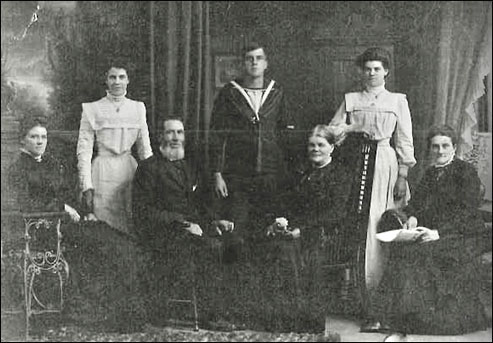
Ellen, Hilda, James, Horace, Susan, Laura, and Aunt Priscilla/Charlotte/ Blanche
|
|
Frederick, now known as Horace, was a draper’s assistant when he enlisted in the Royal Navy in 1906 at the age of 16. He was described as being five feet nine and three-quarters inches tall, with dark brown hair, blue eyes, and a fresh complexion. The 1911 Census records him at an institution - Sarah Ann Widdings, Budock Urban, Falmouth, Falmouth Borough, Cornwall; other 1901 records show that Harry was stationed in Falmouth Harbour aboard HMS Diamond, a Topaz-class 3000-ton cruiser.
A Royal Decree in April 1912 established the Royal Flying Corps (RFC) and the Royal Navy Air Service, alongside the Air Battalion of the Corps of Royal Engineers. The RFC's naval unit, led by Commander C.R. Samson, benefited from a Central Flying School accessible to both officers and privates. By June 1913, the Naval Air Service comprised 44 officers and 105 privates, all trained at specialised schools, with 35 specialists qualified to operate Royal Navy airships. In 1913, Harry transferred to the Royal Navy flying school at Eastchurch on the Isle of Sheppey in Kent, and then moved to the newly opened air station in Great Yarmouth.
With a staff of two officers and 15-20 men, and constructed on the South Denes—once used for horse racing and drying fishermen’s nets—the Yarmouth station was one of only eight airfields in Britain, ready-built to confront aerial threats. Its main aim was to counter the danger posed by German airships and submarines through coastal patrols and reconnaissance missions. As World War I advanced, Great Yarmouth, with 30 land and sea planes, became a vital base for the RNAS. The public was barred from the site during flying operations but could visit on Sunday afternoons if the crews were not in action.
|
Rushden Echo, 25th September 1914, transcribed by Gill Hollis
A Rushden Aviator Getting Ready
In Training as a Naval Airman – Valuable Work
Mr Horace Twelvetree, of Newton Road, Rushden, attached to the Royal Naval Flying Corps, is regularly training as an aviator. Some time ago, he took a test for a flying certificate but failed just as he was about to complete the final part of the flight. We understand that Mr. Twelvetree is based at Yarmouth, where active preparations are underway in the naval flying quarters to make the men as proficient as possible, considering the potential need for naval aviators. It is worth noting that the test for an aviator’s certificate is demanding and complex. Besides being able to start and land correctly, candidates must be able to fly in a figure 8 several times and must also pass the aeronautics theory exam. Mr Twelvetree has been in the Navy for about seven years and has served twice in the Flying Corps. He was previously under Lieut. Sampson. Those who know him and saw the film at the Royal Theatre recently of Lieut. Sampson might have noticed the Rushden aviator standing beside him. The role of naval airmen is likely to prove very beneficial for the country, and Mr. Twelvetree certainly has the best wishes of the people of Rushden for his success.
|
Frederick Horace Twelvetree married Annie Mitchell in autumn 1914.
Annie Elizabeth Mitchell, was born in 1888, was one of six children of William Mitchell, a labourer aged 19 and son of William Mitchell, Steward, and Berry Elizabeth Cudden, aged 20 and daughter of Barney Cudden, a carpenter. They had married at Stokesby Parish Church in January 1878. Her father later became a gardener, working as a domestic servant in Lound in 1891, a groom and domestic servant in Bradwell, Suffolk in 1901, and a gardener and domestic servant in 1911.
At the age of 13, Annie was a Housemaid to retired Farmer William Barry, and at age 23, Annie was a domestic servant to Robert Beazor and his family, a fish merchant. |
 The Rushden Echo, 15th January, 1915, transcribed by Jim Hollis The Rushden Echo, 15th January, 1915, transcribed by Jim Hollis
Royal Naval Flying Corps - A Rushden Promotion
We heartily congratulate Mr. Horace Twelvetree, late of Newton-road, Rushden, on his recent promotion. He is the only Rushden man attached to the Royal Naval Flying Corps, and has gained, after very arduous and exacting work in the flying department at Yarmouth, the distinction of First-Class Petty Officer in Aeromechanics. Since the beginning of the war, Mr. Twelvetree has been worked up to the hilt perfecting his knowledge in aviation in view of contingencies such as have already arisen in some parts of the country. He was formerly under Lieut. Samson, who has been gazetted to a position in command over the Royal Naval Flying Corps.
Mr. Twelvetree has been in the Navy for over seven years.
|
|
|
Post-war, Frederick Horace remained in the Military - listed in 1918 as a 2nd Lieutenant and then on the 1919 Retired List. The following year, Flying Officer and Observer Twelvetree, General Duties, was stationed at Cadet College RAF Cranwell, Stores, General Duties. He transferred to the British Air Force School, Sea Plane Training Coastal Area in 1922, and then to RAF 267 Squadron Mediterranean Group, which, unlike most of the RAF's maritime patrol units, remained operational after the war ended. The squadron was disbanded in 1923, with the Fairey IIID-equipped flight, which was deployed on Ark Royal in the Dardanelles at the time, becoming No. 481 (Coastal Reconnaissance) Flight.
Frederick then spent the next seven years at RAF Gosport. RAF Gosport, originally known as Grange Airfield, began operations with the Royal Naval Air Service in 1914 and the Royal Flying Corps in 1915. The location of Grange Airfield was determined by a series of forts built across Gosport between 1852 and 1862: Fort Gomer, Fort Grange, Fort Rowner, Fort Brockhurst, and Fort Elson. All these inland-facing fortifications required an open area of 200 yards on the inland side, known as 'a killing field'. It became RAF Gosport in 1918 with the formation of the Royal Air Force. The airfield was notable for the School of Special Flying.
|
|
Frederick and Annie had three children: John Edward, Hilda, and Mary.
Frederick died at the age of 60 after a long illness and was buried at St. Andrews, Great Linford; his grave is inscribed with Jimmy Frederick Harry Horace Twelvetree. The brief obituary in the Wolverton Express of 24 March mentions his military service and his 12 years as a publican. Frederick’s widow, Annie, managed the pub throughout the 1950s before passing it to her son in 1959. Today the pub is a popular venue in Milton Keynes.
|
 |
|
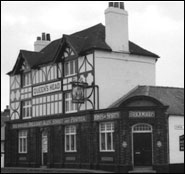
The Queen’s Head, Gosport.
|
Further research by James Billett: After leaving the Royal Navy, Horace became the Landlord of The Queen’s Head, Gosport.
Built in 1926, the pub featured mock Tudor facades and intricate mosaics favoured by Brickwoods Ltd Brewery, Portsmouth.
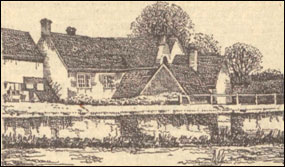
The 1939 Kelly’s trade directory records Frederick Harry Horace Twelvetree as the new publican of The Black Horse, Great Linford, Buckinghamshire, a historic pub, with its front section dating back to at least 1667.
Throughout its long and varied history, it has served multiple roles, including as a farm and a venue for boxing and hunting events.
Its location near the Grand Junction Canal
 |
|
The Black Horse, Great Linford.
|
enabled publicans to attract passing trade from boatmen.
Frederick Proctor Malacky once operated a motorcycle engineering workshop at the premises. The inn also became home to bantamweight boxer Harry Ware, who established a gym for fellow boxers on site. Several landlords managed the surrounding land as a dairy farm; notably, in 1935, the Parker family was convicted of selling milk that did not meet the required fat content. |
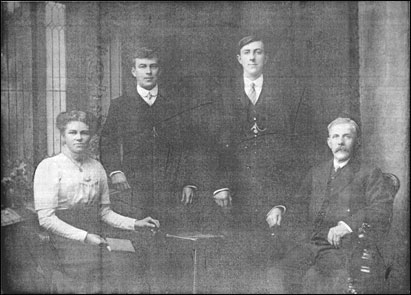
Ellen Baxter married Charles Tomlin in 1886, and they were living at 19 Queen Street in 1901, with sons Harry, Daniel Ernest and Charles.
 |
|
Ellen and Charles with two of their sons.
|
Laura Twelvetree married Charles F Clark in 1911, and Hilda Twelvetree married Horace Maddams in 1912, mother of Harry H Maddams.
|
|
|
|
|
|
|
|
|
|




